
Going Lighter
The Gear You Never Touch: A Simple Method for Going Lighter
Want to know the easiest way to lighten your pack? Stop carrying things you never use.
It sounds obvious, but here’s the reality: most of us are hauling gear up mountains that never leaves our packs. That “just in case” item that’s been on every trip for the past year but hasn’t come out once? That’s dead weight, and it’s costing you energy with every step.
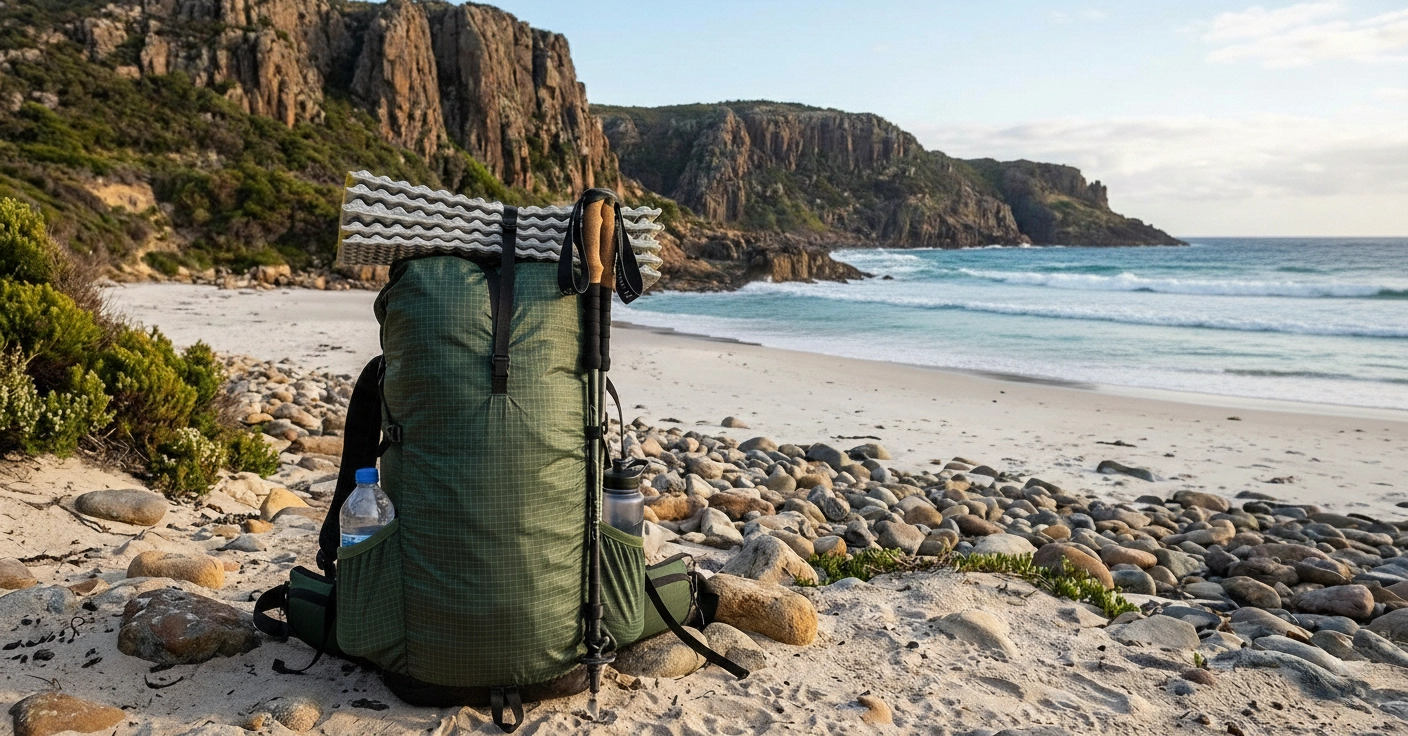
The Unused Gear Audit
Here’s a simple system that will transform your pack weight without spending a dollar:
After every trip, before you even unpack properly, do this:
- Lay out everything from your pack
- Make two piles: Used and Untouched
- Mark the untouched items in a notebook, app, or even with a piece of tape on the item itself
- Track patterns over multiple trips
That’s it. No fancy spreadsheets, no obsessive weighing. Just honest observation.
After three or four trips, you’ll see clear patterns emerge. That emergency repair kit? Never opened. Those extra batteries? Still sealed. That third pair of socks? Pristine.
The Three-Strike Rule
Here’s my personal system: if something goes unused for three consecutive trips in similar conditions, it doesn’t go on the fourth trip. Three strikes, you’re out.
Some items I’ve eliminated this way:
- Camp shoes (there is nothing as refreshing as bare feet after a long walk)
- Backup headlamp (my primary has never failed mid-trip)
- Expensive cooking system (I’ve reverted back to a simple folding gas stove and pot)
- Multiple stuff sacks (everything just goes in one pack sized dry sack)
- Multitool (a small pair of scissors and a needle and thread in the first aid kit is enough)
Each item was “essential” when I bought it. Each one rode in my pack trip after trip, untouched. Together, they added up to over a kilogram of weight I was carrying for absolutely no reason.
The Safety Gear Exception
Now, let’s be crystal clear: this system doesn’t apply to safety equipment.
Always pack, even if unused:
- First aid kit (the whole point is to not need it)
- Emergency shelter, bivy or ‘space blanket’
- Navigation tools (map, compass, GPS)
- Headlamp (even on day hikes)
- Emergency communication device (if appropriate for your area)
- Water purification backup
The goal isn’t to be reckless. The goal is to distinguish between genuine safety gear and comfort items masquerading as necessities.
Here’s the key question: “If conditions deteriorate or something goes wrong, will I need this to stay safe?”
If yes, it comes. Every time. No strikes.
If it’s just for convenience or a vague sense of “maybe”? That’s when you start tracking.
The Comfort vs. Necessity Line
This is where honest self-assessment matters. Some items live in a grey area between safety and luxury.
Camp chair: Not a safety item, but might be worth its weight for your enjoyment.
Book or e-reader: Zero safety value, but mental health matters on longer trips.
Coffee setup: Definitely not essential, but for some people, it’s non-negotiable.
The unused gear audit helps you figure out what you actually value versus what you think you should carry. If you bring a camp chair on five trips and use it every single evening, enjoying every minute? That’s not dead weight, that’s gear earning its place.
But if you bring it and never set it up because you’re too tired or it’s too much hassle? Three-strike rule applies.
The “Just In Case” Trap
“Just in case” is the enemy of a light pack.
We’ve all done it. Packed something thinking “I probably won’t need this, but what if…?”
The problem is that “what if” rarely happens, but you’re carrying the weight on every “what is.”
Classic “just in case” items that often go unused:
- Extra layers (beyond what conditions require)
- Backup water bottles (when you have adequate capacity)
- Multiple knives or multi-tools
- Excessive cord and rope
- That random piece of gear you brought because someone online mentioned it once
Start tracking these honestly. You’ll be surprised how many of your “what ifs” never materialize.
The Lightness Revelation
Here’s what happens when you stop carrying unused gear:
First trip: Your pack feels noticeably lighter. You move faster, tire less.
Second trip: You realize you don’t miss any of the stuff you left behind.
Third trip: You start questioning other items. “Do I really need this either?”
Fourth trip: You’re hiking with a genuinely optimized kit based on your actual behavior, not theoretical needs.
This is how you become ultralight without buying a single piece of expensive gear. You just stop carrying things you’ve proven you don’t use.
The Skills Offset
Often, unused gear represents a skill you haven’t developed.
Carrying a heavy repair kit because you’re not confident in field repairs? Learn to fix common issues, and suddenly you can pare that kit down to essentials.
Carrying extra food because you’re worried about your meal planning? Get better at calculating your needs, and you’ll carry exactly what you need.
Multiple fire-starting methods because you’re not confident with any of them? Master one reliable technique.
As your skills improve, your pack weight naturally decreases. You’re replacing physical gear with knowledge, and knowledge weighs nothing.
The Trip-Specific Pack
One major benefit of the unused gear audit is learning that you don’t need the same kit for every trip.
Summer overnight? I can leave half my layers at home.
Winter day hike? Extra insulation and safety gear, but no sleeping system.
Desert trek? Minimal rain gear, maximum sun protection and water capacity.
Coastal hike? Bring the rain gear, leave the sun umbrella.
But you only learn these distinctions by tracking what you actually use in different conditions. The unused gear audit shows you exactly what’s trip-specific versus truly universal.
Starting Your Own Audit
Ready to start lightening your load? Here’s your action plan:
This week: Get a small notebook or start a note on your phone titled “Gear Audit.”
Next trip: Before unpacking, separate used from unused. Write down every unused item.
After three trips: Review your list. Look for patterns. Anything unused three times gets flagged.
Before your fourth trip: Leave the three-strike items at home. Note how your pack feels.
Keep tracking: Some items will prove they’re worth carrying. Others will prove they’re not. Trust the data.
The Liberation of Less
There’s something deeply satisfying about opening your pack and knowing that everything in it has a purpose. No dead weight. No “just in case” items gathering dust. Just gear that works, that you use, that earns its place.
You’ll hike further, tire less, and move with more confidence. Not because you spent thousands on ultralight equipment, but because you simply stopped carrying things you never touch.
The lightest piece of gear is the one you leave at home. The unused gear audit helps you figure out which ones those are.
The Ultimate Test
Want to know if something really belongs in your pack? Ask yourself this:
“If I could only carry ten items on my next trip, would this make the list?”
If the answer is no, and it’s not safety gear, and you haven’t used it in three trips?
Leave it home.
Your back will thank you. Your knees will thank you. And honestly, you probably won’t even notice it’s missing.
Start tracking. Start cutting. Start hiking lighter with the gear you already own.
The unused gear audit isn’t about deprivation. It’s about clarity. It’s about carrying exactly what you need, nothing more, nothing less.
And that’s the real secret to going ultralight.
This unused gear audit idea came to me after a brutal four-day hike where my pack felt unreasonably heavy. When I got home and unpacked, I laid everything out and had a sobering realization: several things I’d carried never left my pack. I’d hauled that dead weight up every climb, felt it dig into my shoulders every hour, and cursed it every afternoon. Worse, every night at camp I’d unpack these unused items just to access what I actually needed, then repack them the next morning. That exhausting trip taught me that the heaviest items aren’t the ones on the scale; they’re the ones you carry for no reason – Alltreks